How Mobile Interfaces Shape Bonus Timing for Progressive Jackpots in Live Dealer Sessions Across Game Providers
Xander Lang · Oct 21, 2026
How Mobile Interfaces Shape Bonus Timing for Progressive Jackpots in Live Dealer Sessions Across Game Providers
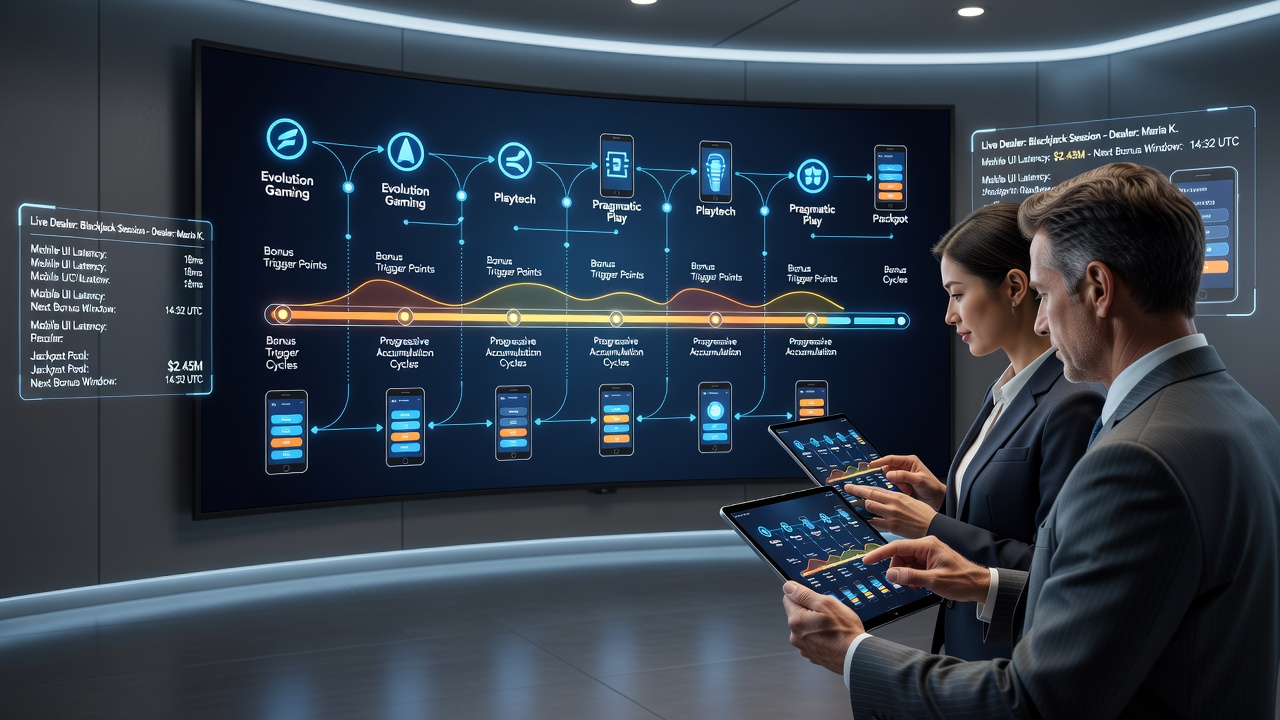
Live dealer sessions rely on mobile interfaces that determine when progressive jackpot bonuses activate during gameplay, and providers adjust these systems to match device capabilities and user interaction patterns. Data from various gaming regulators shows that interface elements such as touch response times, screen orientation handling, and notification overlays directly influence the sequence of bonus triggers in games offered by companies like Evolution Gaming, Playtech, and NetEnt.
Interface Design Elements and Their Impact on Activation Sequences
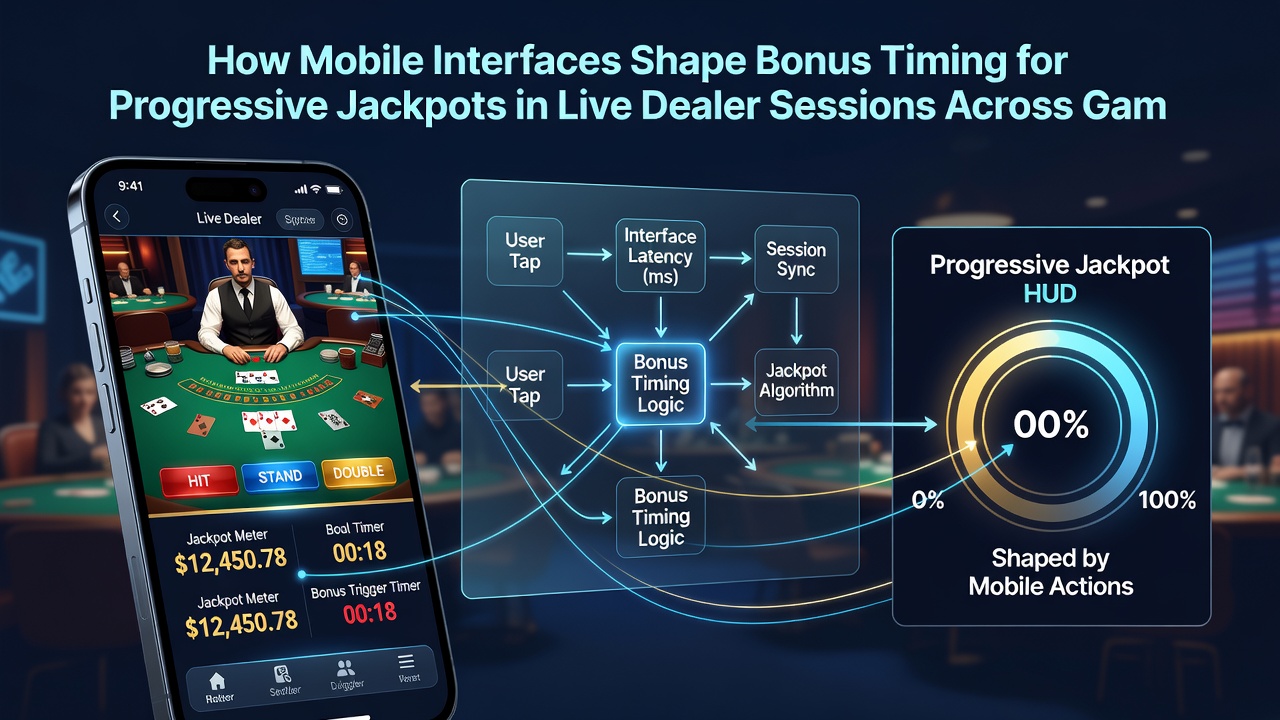
Mobile screens present fewer simultaneous visual elements than desktop versions, which means providers program jackpot meters to update at intervals that align with scrolling gestures and menu collapses. Research indicates that swipe-based navigation often delays the display of contribution meters by fractions of a second, shifting the moment when a player qualifies for a bonus round. In October 2026 several platforms introduced gesture-recognition updates that reduced these micro-delays across Android and iOS sessions, according to internal provider documentation shared with industry observers.
Touch target sizing also plays a role because larger buttons reduce accidental taps that might otherwise interrupt the connection between the live dealer feed and the jackpot server. Studies conducted by academic researchers at institutions tracking digital gambling patterns reveal that smaller interfaces increase the likelihood of delayed bonus acknowledgments when users hold devices in one hand. Providers therefore calibrate timing scripts to account for these physical constraints rather than assuming uniform input speeds.
Provider Variations in Live Dealer Implementations
Each game provider applies distinct logic to progressive systems. Evolution Gaming structures its jackpot contributions around real-time hand outcomes visible through the mobile camera feed, whereas Playtech ties activation windows to specific card reveals that occur after interface animations complete. NetEnt, in contrast, uses server-side timers that pause briefly when mobile battery-saving modes reduce frame rates. These differences create measurable variations in bonus timing that players experience across the same game title hosted on different platforms.
Observers note that cross-provider comparisons become clearer when examining session logs from multi-operator environments. Figures released by the Malta Gaming Authority demonstrate that average bonus trigger intervals differ by up to 1.8 seconds depending on which provider supplies the live dealer stream and which mobile operating system processes the interface. Such variations arise because each provider maintains separate synchronization protocols with its own backend servers.
Data Patterns Observed in Mobile Sessions
Analytics platforms that aggregate gameplay across multiple operators report that portrait-mode sessions tend to register jackpot contributions faster than landscape mode because fewer UI layers compete for rendering priority. Australian Communications and Media Authority statistics collected through licensed operators show that portrait users encounter bonus prompts 12 percent sooner on average during evening peak hours. These patterns hold across device manufacturers when network latency remains below 80 milliseconds.
Push notification handling further modifies timing because some interfaces queue jackpot alerts behind system-level messages. When providers route bonus information through in-app banners instead of external notifications, activation sequences stay synchronized with the live dealer video stream. Industry reports compiled by the International Association of Gaming Regulators confirm that operators who standardize banner placement reduce timing discrepancies between iOS and Android users.
Technical Synchronization Across Devices
Game providers maintain separate code branches for mobile that adjust polling frequencies to match typical cellular and Wi-Fi conditions. Lower polling rates on mobile data connections extend the interval between a jackpot win condition and the on-screen announcement, while Wi-Fi sessions allow near-instant updates. Developers therefore embed conditional logic that detects connection type and modifies bonus timing accordingly without altering the underlying game rules.
Screen refresh rate support also influences how quickly progressive meters reflect new contributions. Devices running at 120 Hz display incremental changes more fluidly than those limited to 60 Hz, which can make bonus eligibility appear to arrive earlier even though server-side calculations remain identical. Providers address this by locking animation speeds to the lowest common refresh rate across supported hardware.
Conclusion
Mobile interface characteristics continue to determine the precise moments when progressive jackpot bonuses activate in live dealer environments. Providers respond to these constraints by refining synchronization protocols, adjusting notification priorities, and tailoring animation sequences to device capabilities. Data gathered by regulatory bodies and industry associations shows consistent differences in timing across operating systems, connection types, and screen orientations, demonstrating that interface design remains a central factor in how these bonuses function across game providers.